
Close
Ghana Forges Strategic Agricultural Alliances with India to Boost Food Security and Mechanization
12Oct’26
Ghana is stepping up its drive for agricultural self-sufficiency through bold industrial partnerships, leveraging international collaboration to tackle high input costs and build long-term food system resilience.
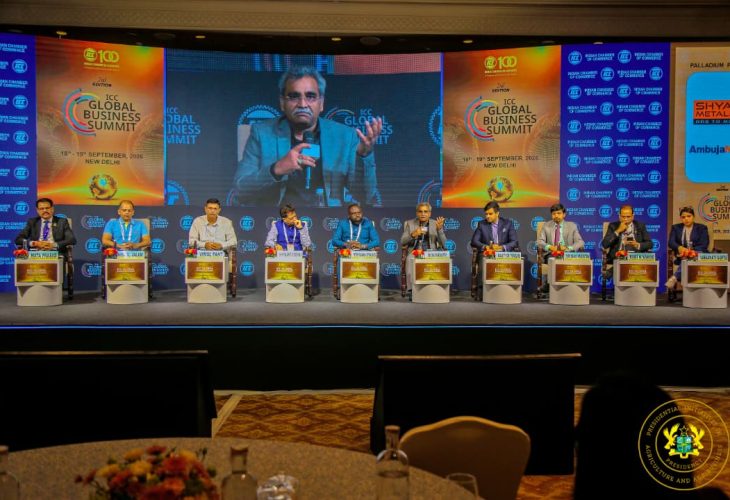
Speaking at the ICC Global Business Summit in New Delhi, the Director of the Presidential Initiatives in Agriculture and Agribusiness (PIAA), Dr. Peter Boamah Otokunor, outlined Ghana’s strategic roadmap for transforming its agricultural sector. Drawing inspiration from India’s success in reducing agricultural input costs from 12% to 5%, Dr. Otokunor emphasized that modern food security requires a comprehensive approach that addresses pre-production costs, local manufacturing, and smallholder empowerment.
Under the government’s Agriculture for Economic Transformation Agenda, Ghana is moving past traditional import dependencies by establishing direct industrial partnerships with key Indian entities.
Mechanisation and Tractor Manufacturing: PIAA has engaged International Tractor Limited (ITL) to transition technology to Ghana, moving from local assembly to establishing a full-scale tractor manufacturing plant designed to serve the broader West African sub-regional market.
Localised Fertilizer Production: Advanced discussions and studies are underway with IFFCO, India’s premier fertilizer cooperative and manufacturer, to shift parts of their fertilizer production directly to Africa, harnessing the continent’s abundant natural resources, including natural gas, oil, sulfuric acid, and massive phosphate deposits.
Addressing a global audience, Dr. Otokunor noted that both Ghana and India share remarkably similar agricultural structures, where roughly 95% of food is cultivated by smallholder farmers working plots of one to five acres. He underscored that unlocking the true potential of these farmers lies in structured organization, uniting individual smallholders into coordinated groups to scale up production volumes, improve marketing efficiency, and feed commercial industries.
Furthermore, Dr. Otokunor stressed that modern food systems must evolve past basic availability, stability, and nutrition to factor in consumer convenience as urban incomes rise and families grow busier. Closing his address, he emphasized that all steps toward agro-industrialisation and international trade, such as trading Ghana’s cocoa and cashew for India’s wheat, rice, and milk, must remain firmly anchored in climate-smart agriculture to ensure the sustainable use of the world’s natural resources.

Leave Your Comment